
I enjoyed making the collage, even though I was having trouble with the website originally. I like the idea of collages as it allows you to express yourself and your ideas in ways that would be difficult with words. The use of pictures help your audience see what image you are trying to create and can really feel the emotion you are trying to get across. I liked how there were already gifs and images to use that would help structure my layout for my collage and how it was easy to copy and paste an image onto the collage. My only problem with the collage is that it kept shrinking down my work and some images simply would not work on the collage. If I were to expand on this collage, I would add a border around the edge of the collage and would upload some images that I took myself to show my connection to my topic.
Category: Reflections
Any and all blog posts published in response to prompts from the class schedule.
Collage Reflection
I liked using the mmm.page because you was able to play around with the tools and it allows to you to expresses the message you are trying to send in your own way. It ‘s a way to express yourself visually and I like it. Instead of saying a lot in a piece of paper, you can show your message through the collage. In my collage I tried to show the side of what’s my version of being a girl. I made it pink, and started to add things like favorite characters and show quotes, simple images of shopping bags, and just things that make me feel girly. I honestly was playing around and threw in “I’m just a girl”, “how I love being a woman” and a bow that represents coquette because that’s the memes going on for the girls. There is definitely more that I can add on into that collage but I didn’t want it to look like a lot. Honestly all I can say is that it I liked making the collage and I loved making it pink. 🙂
Collage Reflection
I did really like this activity, I ‘m not super comfortable with telling people what kind of a person I am because of how they may judge me. I think adding simple pictures and memes such as like I did really helps people really understand who I am. It was also fun to with simply dragging and dropping whatever came into my head. Resulting in people who look at my collage get a sense of me and who I am, maybe not to the full extent but it’s better than nothing. I also think it was a great activity, there wasn’t much thinking and I loved that part, also self expression is super important like I’ve mention. Not just to other individuals but yourselves.
Collage Reflection
I liked using mmm.page to create a collage. I think the full freedom you have to make whatever you want makes the experience very fun. It helps to have that creative freedom when trying to get a point across. My collage was just a collection of interests basically, no real message behind it, but it was fun moving things around to create an interesting picture. Due to the inherit freedom with collages, you can show a visual representation of the point you are trying to make, something that traditional writing cannot do. I don’t know if there was something I didn’t like about the website, it seemed good to me. I wouldn’t add anything to my collage seen as it was just a silly first one, but I would definitely want to make more for other topics.
Collage
I put my collage together focusing on the topic of climate change. Climate change is a significant issue because it harms our environment and health. Not only does climate change impact us, but it will continue to impact future generations if something is not done. Instead of presenting this topic in a traditional writing method, a collage can better bring out the message with its images. We connect with images more than text because they instantly inject characters and emotions. In addition, colorful images are more appealing than black and white words which lessens the likelihood that readers will leave the page. I really liked this website because it was easy to use. There was a wide variety of stickers and it only took a second or two to add them to my work. It is much better than other tools like Google Drawing because all the tools on the website are simplified whereas there are so many tools on Google Drawing that it can be overwhelming. There wasn’t anything I disliked about the website and I find myself using it in the future.
Collage Reflection
I enjoyed making my collage, it was fun to bring images and art that I like together. I think images and photography are able to communicate more immediately than traditional writing. It takes less than a second to consume a photo, but it may take anywhere from a couple of minutes to years to come to a comfortable understanding of even an excerpt of writing. Photos can invoke a desired reaction as quick as (or quicker) than music, in my opinion. Personally, I incorporated my love of art in my collage. I feel artists have a heavy impact on my life and I’m connected to the ways in which photography, pop culture, music, etc. all work to shape my taste as I get older. I think growing up in an environment that encouraged my creativity really contributed to my confidence which I’m grateful for. The only thing I wasn’t a big fan of on the digital page was that the GIFs seemed a little outdated. Other than that, I had a good experience. I wouldn’t add anything else to my collage, but I would definitely enjoy making another one.
The Comet
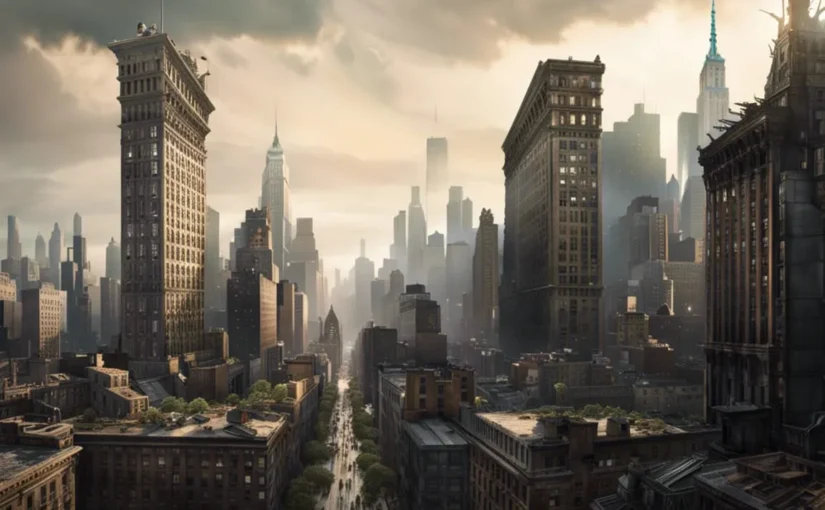
After reading The Comet by W.E.B. Du Bois, I gained a better understanding of the use of genre conventions for rhetorical effect. Throughout the reading, the author showcased the use of speculative fiction and post-apocalyptic storytelling to articulate the way society works and the deep-seated racism in the landscape of New York City both then and now. In the story, the author sets the scene with a comet that takes place, and two people are alive, both of whom are of different races and different walks of life. When the character Jim was looking around NYC, he found another woman who was white to be alive. The author stated, “Not that he was not human, but he dwelt in a world so far from hers, so infinitely far, that he seldom even entered her thought.”. The author interprets that because of their way of life, they were unaware of society and other people of different kinds. An interesting interpretation of this piece of work from Du Bois is that it is still present today, and people are looked upon a certain way based on what they look like, and this story showcases this very well. Towards the end of the story, as the two are waiting at the building, a group of people, her father being one of them, finds them and automatically assumes the worst in Jim and that he did something to her. The author stated, “And this man here? He asked, encircling her drooping form with one arm and turning towards the Negro.”. W.E.B Du Bois articulated an interesting story to inform the readers of the use of speculative fiction and post-apocalyptic storytelling, showcasing the way society works and the deep-seated racism from past and present.
The Comet: Close-Reading Analysis

“The Comet” is an afro futuristic, sci-fi story by Du Bois. A short story written in 1920 aimed to expand on what the color line meant. It was a post-apocalyptic story and allegory to bring up a powerful critique of racism in society, particularly within New York City. He wrote about a cosmic event and created a world where society was destabilized to be able to explore issues of race and power of stability on a blank canvas. Du Bois highlights the civilization and the resilience of some injustices, pre and post-comet systems. By portraying a post-apocalyptic scene and the city in ruins, Du Bois highlights the damaging effect of racism on society and the persevering through battle for endurance in a hostile environment. He employs symbols to critique racism. The protagonists Jim a black man and Julia a white woman are the first known survivors of cosmic devastation in the story. Their alliance symbolizes the potential of cooperation across racial lines. However, after finding out they were not the only survivors, their relationship/journey is fraught with challenges and dangers reflecting the influence of racism on societal dynamics. Through the main character’s interactions, Du Bois exposes the hypocrisy of racial prejudice and the nature of racial divisions ultimately advocating for racial unity, awareness, and understanding. “The Comet” serves as a cautionary tale and call to action kind off, challenging readers to confront racism and envision a fair future. lastly “The Comet” by W.E.B. Du Bois utilizes genre convection such as post-apocalyptic storytelling, and symbol a narrative that critiques deep racism in society. Through the investigation of subjects like endurance, fortitude, and fundamental foul play, Du Bois welcomes readers to consider the getting-through effect of racism and envision elective ways towards social change.
After reading the text I believe that often when privileged people seem to be in trouble or striped away from their privileges or social groups they are likely to change. I also believe that anyone would act the same way Julia did just in a sense of survival. In general, the story was really interesting to read and it was engaging to learn about Afrofutism since it is a term I hadn’t heard before.
“The Comet”
“The Comet” by Du Bois is a science fiction story with underlying social commentary from an Afrofuturistic perspective. Sci-Fi stories often involve post-apocalyptic settings. In “The Comet”, the protagonist, a male African American, finds himself in a world where the majority of people in New York have been killed by a comet. He stumbles across a wealthy White woman, and for a brief period, they believe they are the only survivors on Earth. The two come from very different backgrounds and would have never interacted prior to the comet strike, but when faced with the end of the world and only each other to rely on, these preexisting racial and class barriers dissolve and they form a human connection. This fictional setting prompts the audience to imagine a world where racial and socioeconomic status no longer matter and consider the irrational nature of racial and class discrimination in the real world. “The Comet” therefore uses a post-apocalyptic setting commonly seen in Sci-Fi stories for rhetorical effect.
Upon reading the text, I reconsidered the absurdity of all forms of discrimination. Oftentimes, when the privileged are stripped of their privileges, they become just average human beings. Consider social status. People are often born into the social class that they belong to for most of their life, and people of higher social status often inherit their status from their predecessors. However, without those predecessors, privileged individuals would not possess such privilege. The same goes for wealth. Wealthy people live prosperous lives, but without their wealth, they would just be average human beings as well. This was seen when the wealthy White woman in the story was forced to rely on the protagonist when her status and wealth no longer mattered and she was on an equal level with him.
Overall, it was very interesting learning about Afrofuturism and perceiving social issues from the perspective of African Americans.
The Comet
In “The Comet”, W.E.B. DuBois utilizes genre conventions of science fiction to comment on racial and class inequality in the U.S. Like many sci-fi stories, the conflict unravels once the city has become a post-apocalyptic world and everyone is dead, except for the main character, Jim. Prior to the death that the comet has caused, Jim’s experience as a black man is narrated through his thoughts of bitterness as he feels the subpar treatment he receives from his white colleagues. In fact, the only reason he survived was because he was ordered to do the undesirable and dangerous job of searching an underground vault. With the same luck, the white woman he later meets avoided death by coincidentally being in her darkroom developing photos. While these two characters come from painfully contrasting walks of life, they are both survivors of the comet that could have easily killed them both. Mortality does not discriminate between race or varying degrees of wealth. Their humanity is shared through this daunting experience. As they search the city together, the labels that they carry with them everyday begin to fall. Jim is no longer a black man, he is just a man, who is somewhat timid but still has protective instincts. Ironically, in the absence of humanity, he has become humanized. The weight of Julia’s wealth dwindled in importance as soon as she found herself needing Jim for assistance. Her money gave her the power to never be in need of anything in life, but all of a sudden the only thing she needed was a friend.
Along with the genre conventions of science fiction, DuBois’ narrative decisions contribute to the impact of the story as well. For example, Jim’s name is hardly mentioned throughout the story and Julia’s name is only mentioned once, at the very end. DuBois’ decision to omit their names places a larger focus on the essential facets of their characters: their race, their class, and their position in society as a result. Additionally, DuBois’ style of omniscient narration when conveying Jim and Julia’s thoughts illuminate the way racism has infiltrated their existence so implicitly. Rather than providing dialogue, reading the thoughts of the characters feels more reflective of the slight, subliminal ways white supremacy truly permeates the world. For example, when Jim first looks at Julia he thinks, “Yesterday, he thought with bitterness, she scarcely would have looked at him twice” (56). And as Julia finds her trust for Jim in limbo she thinks, “One moment she was terrified, then she thanked him silently for his delicacy and turned resolutely, with a quick intaking of breath” (58). At this moment, Julia is finding it difficult to erase the thoughts that infiltrate her white, female mind when faced with a black man. But if DuBois were to verbalize these thoughts, they would not be as powerful or hit the reader in the same way. Racism and class inequality are not just ideas that some of us learn about, they inhabit our thoughts and our bodily reflexes. Thus, I think DuBois does a great job in conveying this message through his very specific rhetorical choices throughout “The Comet”.
Time Capsule
In Atwood’s “Time Capsule Found on the Dead Planet, she utilizes conventions of dystopian fiction to critique society. Atwood structures her piece into five progressive sections. The first section uses imagery to emphasize the importance of God. The second and third section discusses the creation of money which became a problem. In the text it states, “It began to talk. It began to create on its own. It created…famines…” Atwood uses personification to show how money became powerful enough to create disasters. When humans place too much value on something, power is created upon it. Each of them desires more power than others. The “famine” that Atwood mentions likely represents the aftermath caused by fighting for money and power. The fourth section and fifth section talks about the formation of deserts which further shows how money is corrupting society. The text states, “Wars, plagues and famines visited us, but we did not stop in our industrious creation of deserts.” This exposes the greedy nature of humans because even though they were aware of the destruction caused by money, they did not proceed to stop. Humans become attracted to personal gains that they ignore the impact of their actions on others and society as a whole. All in all, Atwood’s use of dystopian fiction conventions brings awareness to major issues that can lead to the end of the world. In doing so, it challenges us to see what the future may hold.
Time Capsule Found on the Dead Planet
After reading and interpreting Atwoods writing, I can say that Atwood’s writing style is very intriguing, as it was able to capture my attention by telling a story in a different manner. The title of the text being “Time Capsule Found on the Dead Planet” makes me think of a cartoon, this sounds like the name of an episode where they maybe encounter a new planet and find a time capsule that explains everything that went on throughout life on that planet. However, Atwood goes on to tell a story in chronological order, numbering each part starting from the creation of gods, to the creation of money, to the evolution and what money became, and finally, the creation of deserts. Atwood is trying to tell a story in a creative way. The gods we “created” are what we pray to and what we put in churches, hence the “We forged them from shining metals and painted them on temple walls.” Then we created money, which is self explanatory, ” This money was also made of shining metals. It had two faces: on one side was a severed head, that of a king or some other noteworthy person”, as coins and paper money have former presidents on them. Then the evolution of money, the growth of greed and what money has become. And finally, Atwood talks about deserts, which I interpreted as cities or just anything that required money to create, that was not on earth before humans were created. Atwood’s writing style is very unique, it gives me a feeling that something else is being told (like a storyline for a cartoon, like I said before), but in reality its just a story on what money has done to us.
Now, Then, Present
by Otish Das
After reading “How Afrofuturism Can Help the World Mend” by C. Brandon Ogbunu, it’s easy to put the dominance of Afrofuturism had a deep impact because of the message the movement had. It had an overall aspect of global healing thus in order to help with the future of humanity. It takes on issues such as social, political, and environmental. With shifting the attention to Du Bois the implement of his storytelling reflects on the racism that is very much relevant in today’s society. The story telling aspect does leave an impact that the world is yet to change, setting in an apocalyptic environment is supposed to be a sign of a call to action. Especially in an setting of New York which as everyone knows has a large demographic. Thus trying to persuade the reader in taking action in of hopes shaping a better future.

Time capsule found on the dead planet

In “Time Capsule Found on the Dead Planet,” Margaret Atwood skillfully employs speculative fiction and dystopian themes to sketch a cautionary tale about the trajectory of our current environmental and societal behaviors. Integrating allegorical elements, she critiques our modern fixation on wealth and power alongside the catastrophic impact this has on Earth.
Atwood’s story carries us across different epochs of humanity—beginning with an age of natural deity reverence, transitioning to a period dominated by the idolization of money, and culminating in a bleak future characterized by environmental desolation. This journey symbolizes humanity’s departure from cherishing the natural world towards a prioritization of materialistic gain, depicting how such shifts could precipitate our collective demise.
The dystopian future portrayed by Atwood isn’t mere fiction but a plausible outcome should we persist in overlooking climate change and environmental deterioration. Her choice of speculative fiction serves not merely as entertainment but as a reflective tool, prompting readers to contemplate the ramifications of today’s decisions on tomorrow’s world.
Atwood’s narrative serves as a potent reminder that our quest for wealth and influence must not come at the cost of our planet’s well-being. We are urged to reevaluate our values and take proactive steps to avert the dystopian fate Atwood forewarns. This narrative is more than a story; it’s a clarion call to safeguard our planet before it’s too late.
Adding to this, the narrative’s conclusion evokes imagery reminiscent of catastrophic movies depicting the world’s end, which reinforces the urgency and magnitude of the warning. Furthermore, I observe how in today’s society, the concept of wealth has evolved, with social media followers emerging as a new currency. This shift underscores a lack of awareness about the environmental cost of maintaining our digital lives. Just as we were once oblivious to the impact of our actions on the planet’s health and the pollution they caused, we remain unaware that the technology powering our apps also generates pollution, contributing further to the planet’s deterioration. This realization adds another layer to Atwood’s cautionary tale, emphasizing the need for mindfulness and action in all aspects of our lives to protect our world.
Frozen in Time: Warning of Climate Change
In Atwood’s text “Time Capsule Found on the Dead Planet,” she uses genre conventions to indicate her critiques of contemporary society while warning future generations about the impacts of wealth and climate change. Atwood begins with the creation of gods, numbering this as one and continuing the list as she continues. Atwood’s structure provides the reader with a clear depiction of progression. Beginning with the creation of gods, we are presented with all the goods and prosperity they offer us. In the second age, we are introduced to the creation of money, thus resulting in greed. In this second age, Atwood uses more dystopian literature to depict the catastrophes that soon plagued our society. Atwood critiques contemporary society by using dystopian literature, and the tone in the text drastically changes by the second age. Furthermore, this new amount of mysterious and intriguing wealth could be considered the latest form of “the gods.” People now carried money with them, similar to ancient civilizations when they simultaneously carried their faith and the influence of the gods with them as well. Now, money was their new influence. Money thus became a god as it had power and seemingly was out of control. Finally, in the fourth age, Atwood describes the creation of deserts in which she uses speculative fiction to explore the possibilities of what our world could become if things do not change. The desire for more money and greed have ultimately created these deserts. Even while people face famine and wars, this does not limit the extent to which they are willing to go to gain wealth. Ironically, through the growth of money, we assume that our environment and society would have flourished, yet it has done the exact opposite. Throughout this text, Atwood connects all these creations back to humans, thus the root of the problem: our greed. Too much of one thing that goes unchecked tends to become a negative feature in communities that desire it. The last line, “Pray for us, who once, too, thought we could fly,” distinctively shows the aspirations of humanity that went beyond their capabilities. Therefore, Atwood illustrates the cautions about the consequences of climate change in hopes of discouraging future generations from making the same mistakes.
Atwood’s Time Capsule
After reading “Time Capsule Found on the Dead Planet” by Margaret Atwood, I could better understand the use of genre conventions for rhetorical effect throughout her article. Atwood wrote her piece articulating the idea of humanity in the past and what could happen in the future. An essential aspect of her writing was that she numbered her story as she went on to tell it. This showcases the problems faced as time went on, from the beginning of the gods to money and how it changed the way of life and the environment. Atwood uses genre conventions for rhetorical effect in her article by showcasing the dystopian and dark setting that ultimately shows us that if we do not change how we view the environment and the world, it could lead to problems. In the article, Atwood stated, “In the third age, money became a god. It was all-powerful, and out of control.”. A problem faced in this article that Atwood mentioned was the effect money had on the people and how it ultimately ruined how people acted; the power they had became out of control. Throughout the article, Atwood continuously articulates that there are deeper meanings of the world itself that we are unaware of. Atwood uses a lot of symbolism to showcase a more prevalent meaning. For example, the title uses the words ‘Time Capsule’, which means to store or have information that could be beneficial or not to society, and then the words ‘Found on the Dead Planet’ show that what happened in the past could have affected the future and ultimately gives us the warning to pay more attention to the environment and our actions that we play a role in.
Navigating the “mobile surround”

New York City is known to be one of the “fastest” cities ever. Everyone has somewhere to be, things to do, and people to meet and they dont have time to waste for smaller things. Being a full-time student and a part-time employee, time is something I wish I had more of. Because of this, I need to already have a plan on where im trying to go and what I need to get done as soon as I get there. When it comes to writing, I need to have access to the internet and sometimes a power outlet if I need to charge my laptop. The best place for me, and im pretty sure for any other Baruch student, is the Baruch library. The library offers internet for students, outlets, even though half of them don’t seem to work. and its quiet most of the time. However, we aren’t allowed to bring outside food or drinks so if I’m on an empty stomach, I would reconsider going here. My secound go-to would be the McDonalds on 23rd street. It does get packed pretty often and can sometimes be noisy, but when its not, it is one of the best places for me to get my writing assignments, or anything else for school. They have a decently stable and fast internet connection, and they offer food and drinks, mainly coffee. They also have outlets in the back of the second floor that anyone can use. If im low on time and its getting late, obviously I would go to my home and work there. I don’t have a desk in my room thats big enough to support having multiple books on it, so I would do most of my work in the dinning room instead. Time isn’t a thing that any of us have to spare, so we have to use it to the best of our abilities.
My Brain as I write
Writing is something I like to do. I like to go into the past, think about stuff that I’d like to write about and write it down on a paper. The environment in which I write in can also depict how well I write. For example, while writing this one of my friends called me to catch up with me and I stopped at “write it down on a paper” for like 30 minutes and completely lost my train of thought. Sometimes, I need to be in my room with some sound like music or someone to talk to, in order to write properly. Other times I need to be in a school environment because at home I feel too lazy, too attracted to my bed to really write. At times, I feel uncomfortable doing work in my house because of how easily distracted I am so I’d just get to school a little early to do my work.
Technologies effect on my brain
Nicholas Carr explains in “Is Google Making Us Stupid?” some negative effects of technology. He says that he feels as if somebody is tinkering with his brain. I understand the feeling described in the reading, but I personally do not feel the same.
I’ve never been a reader. I would have books, but I just wasn’t interested in them. My mom would tell me not to play games too much, to read a book instead but I felt like “why waste my time reading a book when I can be having fun doing something else?” I just cannot focus on a book. Sometimes, reading a book for class can be engaging, I feel like I’m starting to like a book. I believe that the idea of a book that I like ending eventually is what makes me not want to finish. I would love to read books, but they must have multiple parts to it, like Percy Jackson. I loved Percy Jackson because when I finished the first one, I found out there were like 4 more after, along with 2 movies, so its like the story never had an end. After that series, its like if reading just became boring to me.
Technology’s effect on me – Blog post #2
A writing technology Dennis Baron discussed in From Pencils to Pixels is the computer. The computer allows people of all ages to write easier. I believe that using a computer, I am able to write alot better than I can when I am writing on a paper. On a computer, I am simply typing my thoughts, whereas on paper, I have to constantly click my pen/pencil to make sure I am actually writing, along with erasing or crossing out mistakes. Also, when I write a lot, my hands tend to hurt and sweat alot and I don’t like that.
Using a computer to write is not only more convenient for me, but it also allows me to do research as I write. Sometimes while writing a paper in high school, I’d forget how to spell a word, or forget the definition of a word. My high school was very strict on the no phone rule, so I’d have to just find something else to write instead. Using a computer to write, however, allows me to search up a definition of a word, or type a word in the way I think its spelt, and Google will give me the definition of the word, along with an example on how the word is used, and also correct my spelling.

