The brain & Avoiding the noise

🧠

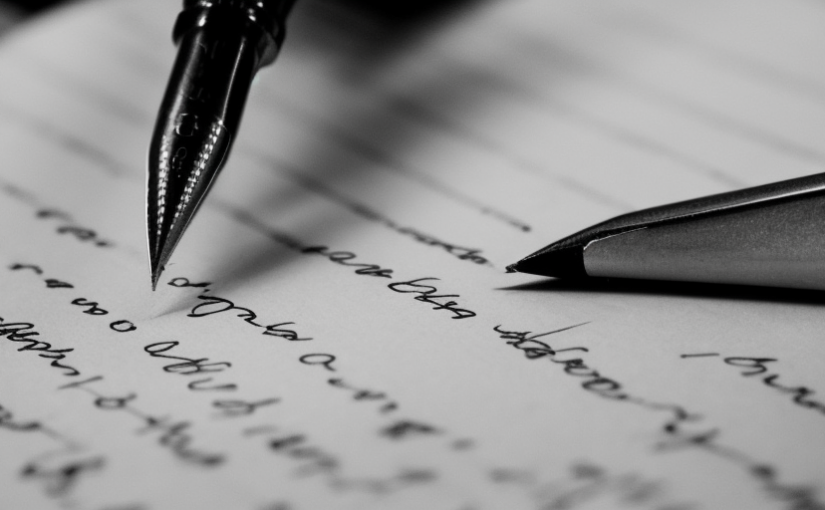
The human brain houses very complex systems.Imagination,thoughts and that inner voice are constant occurrences inside our head.Writing is a way to encapsule these thoughts to avoid deletion from your memory.As a student writing is a part of my everyday life and it’s something I really enjoy.Personally I’m not very fond of books and reading as a whole but writing is definitely therapeutical and can even be fun sometimes.When writing I usually encounter many distractions that make my thoughts disappear into thin air.Finding places where I can avoid this is very important and can affect  my productiveness and performance.I tend to write when I’m in what I call “the zone”.To me this is almost like that rush of productiveness we get randomly at 3AM when we think about our life and feel like we aren’t doing enough.You know exactly what I’m talking about.When I’m in “the zone” creativity is flowing through my brain and I can avoid writers block seamlessly.Everything comes so easily and this is when I usually jot down ideas and try to formulate the organization of my thoughts.Most of the time I go to real quiet,personal spaces to write.My room is usually the place where I can write with total silence and little to no distractions.As I said before this is important to me as a writer and definitely a key part to my writing formula,other people might need more complicated resources to be the best writers they can be,and that is fine.To me it’s as simple as quiet room+pen+paper.


My mind is going

Nicholas Carr’s commentary on search technology and the subsequent results of the convenience of said technology has stuck with me because of how much I can relate to what he is saying. The things that are happening because of how convenient it is to get information are things that people may not pay attention to, I certainly paid it no mind, until Carr spelled it out in his article.

I used to be a big reader and you could often find me in my room sitting with a book until I finish it. Recently however, even though my enjoyment of reading has not gone away, my attention span has. I find myself reading shorter stories online instead of a proper novel. I have novels at home that I would like to start, but can’t seem to find the energy or appropriate attention to do so. This is also shown in how I approach most readings for my classes. Even if the reading is interesting, I find myself just naturally skimming the page and skipping words even if I don’t mean to be doing so. I even remember asking my mother, who reads a lot of books on her kindle, how she reads so fast. How does she do it you might ask? Yup, she skims the page.

In terms of how we interact with knowledge on a daily basis, there is also the fact that instead of reading the textbook pages to help you solve a homework problem, you may google the question and find a quizlet deck with the answer. Most people cannot sit and gather information how they used to, it needs to be quick and snappy and I myself am honestly one of these people as much as I hate to admit it. Will I pick up a book sometime soon, honestly maybe. But as far as this technology goes, as Carr says “I’m not thinking the way I used to think.”

Technology make us better or worst?


Nicholas Carr’s commentary explores the significant impact of search technology and the Internet on our reading habits, cognition, and interaction with information. This topic particularly resonates with me, as I’ve only recently discovered a passion for reading—a pastime I previously found little joy in and seldom devoted time to. Initially, I struggled to concentrate on texts, but as my interest in reading grew, so did my ability to focus. However, I’ve also noticed how easy it is to become distracted when one lacks motivation or interest in the material at hand.

In instances where I need to conduct online research for any reason, my patience wanes, and I seek out straightforward answers. This tendency has only intensified since I began using ChatGPT. Now, when I’m in search of specific information, I’m even less inclined to undertake a traditional Google search because ChatGPT provides direct responses.

As a member of the new generation, I’ve also entertained the notion that I could learn much from TikTok, attracted by the platform’s quick videos that succinctly cover various topics. I suspect I’m not alone in this belief. Yet, I eventually realized that none of the information retained because the rapid and effortless manner in which it was presented and received did little to facilitate genuine understanding or long-term memory.

Writing in the Digital Age

As Baron discussed, technological advancements have influenced literacy practices in recent years, especially since the widespread adoption of the computer. Technology has certainly impacted my writing practices. It provides the basis for my writing and is useful for editing and refining my work.

One application I frequently use is Google Docs. It provides a digital space to store and create my documents. I usually write my essay drafts and class notes in this application. In contrast to physical papers that can be damaged or lost over time, Google Docs is able to safely store documents for prolonged periods of time. I can retrieve my 7th grade biology assignments despite having written them years ago in a different country, something that would have been difficult to accomplish without technology. Another feature I enjoy is the synchronization between various devices. As long as I log into the same account, I can access my work from virtually any device in the world connected to the internet. In a sense, my work will always be with me and will be easily accessible. This also introduces flexibility since I can edit from my Google Docs app on my phone while laying down in bed, which would have been difficult to do using paper and pen. I also enjoy its collaborative interface that enables multiple users to edit and write simultaneously. If the writing was done on paper, it most likely be more time consuming and limit the number of editors, ultimately effecting the quality of writing. 

For similar reasons, I enjoy using the Notes app. It supports collaborative work and stores documents for extended periods of time. I still have access to the French vocabulary list I studied in middle school. Like a notepad, I can easily open the Notes app and jot down notes and ideas. I also like the simple and minimalist design of the platform. Other applications that have multiple features can be distracting when trying to focus on writing down ideas on a document, so Notes provides a simple solution to this issue. 

Lastly, I would be lying if I said I do not use AI tools for writing to some extent. When it comes to generating, summarizing and organizing ideas, applications such as Chat GPT can be very useful. They can produce excellent work in seconds, which is why many people in the work place and school have been using them. Relying on them excessively will only be detrimental to building your literacy and writing skills, but using it as a guideline and a stepping stone to continue on with a writing project can be extremely helpful. 

My Journey Navigating the Digital Writing Realm


“In the digital writing era, the computer has transformed literacy practices, shaping our language and communication”

– Dennis Barron

The process of writing has changed dramatically in a world where the click of a computer has replaced the scratch of pencils on paper. When I think back on how I write, I see that I can move between digital and physical media with ease, and each has its benefits for my creative writing.


The Pleasure of the Tangible

There is a certain physical quality to the feel of pencil on paper. I enjoy the ease with which I can scribble ideas, do simple sketches of outlines, and record important points in a notebook in the beginning. This tactile method gives me a genuine touch, letting ideas develop naturally without the pressure to edit and modify too soon.


The Tech Landscape

Writing technologies have evolved beyond word-processing tools. I particularly use Grammarly every day and find it extremely useful, it makes proofreading easier, while note-taking applications help me keep my thoughts organized neatly. These devices are useful tools that improve my writing process significantly.


The Future

Technological innovation has brought about disruption within every area of human life. Artificial intelligence more so than ever is automating previously human tasks such as basic writing promts, writing code, outlining essays or responding to emails. As every previous invention, AI is meant to boost human efficiency, making everyday task easier, leaving humans with the only part of us we cannot replicate – the creative, inventive aspect which made these inventions possible in the first place.


Is AI Transforming Our Thoughts?

Nicholas Carr’s commentary highlights concerns about the impact of modern technology, particularly the internet on our cognitive abilities and the way we think. His commentary in “Is Google Making Us Stupid?” explains this more deeply. Carr talks about how the easy access to vast amounts of information availble online can negativly affect how someone reads and thinks. And it serves as a purpose to show that over- reliance on technology can have potenital consequences for cognitivie tasks. Carr then goes on to talk about some of the consquences of AI and some of its benfits. And he concludes by saying that we should strive for a balance and that AI should help us and aid us, not replace us.

Memory Machines

Nicholas Carr’s states that AI can be seen as an extension of the human memory and cogintion. AI’s have many abilties that can help any user, it can store, process and retrive data. In my personal writing and literacy pratices I plan on trying to balance my use of AI. I can use AI to better my efficency and accuracy, while also using tradtional pratices. A better way of saying this would be by saying that I use the help of AI to better my writing, while my abilites (human abilty) is the core.

Starbucks Students and Library Learners

In Stacey Pigg’s book “Transient Literacies in Action,” she discusses something called “the mobile surround.” The Mobile Surround is the idea of people working on their papers or projects in shared places or shared experiences. The first example that comes to mind is Starbucks. One of their greatest marketing strategies was giving out free wifi for all customers to be able to do their work in the shop. A classic Starbucks aesthetic is walking in and seeing rows of people working on their computers, typing away. Other common examples of this include public libraries or parks. As a college student, you always have work to get done.

With that being said, you need to be creative in order to turn many different locations into your own work desk. For me, personally, I’m unable to work in any noisy place. If the room isn’t near-silent, I have a hard time concentrating and find it impossible to work there. For that reason, I myself have never become a huge “Starbucks Student.” As a college writer, I have adapted the school’s Library to be my second writing home. I have found that everyone is respectful of the library’s policies of keeping quiet and I enjoy that. I like hearing the clicking sound of everyone else’s keyboards; it always sounds like there’s hundreds of keyboards clicking at a time. Another reason I love the Library is that everyone is there with the same purpose. Although we aren’t doing the same project or even speaking to each other, feeling the presence around you that everyone is getting their requirements done motivates me to push through my assignment. Lastly, the good vibes in the library always keeps me moving. In the library, I know my surroundings won’t be the reason I get flustered because I always know what to expect there, unlike places that other people prefer.

Do We Always Need Machines?

As a college student, I’ve noticed there is genuinely no need for paper and pen when there is technology. Everything is done online whether that’s reading, taking notes, homework, tests, quizzes, etc… There are some professors that require handed-in homework but it’s rare when everything can be done online. This also goes for research we’re able to find about any piece of information online making everyone heavily dependent on technology. The rise of generative artificial intelligence is an important factor in how people think, read, and write. In Nicholas Carr’s article “Is Google Making Us Stupid?” Carr mentions how the internet seems to make concentrating and contemplation harder. Thanks to technology we’re able to easily access information and answers in just a matter of seconds but is this actually helping us? 

Carr also mentions how Sergey Brin, a founder of Google said if we had artificial brains that had all the world’s information we’d be better off. This is somewhat disturbing and frightening. Yes, knowing information is useful and great when living in a world like today but it doesn’t necessarily mean it should be the result of something artificial. Depending so much on technology and the internet makes humans less intelligent and this enables that idea. 

This technology of memory machines relates to my own writing practices in many ways. Though I try my best to stay in touch and off the web it’s hard to not give in to the memory machines. Today there are many tools used to correct grammar and spelling, I personally use Grammarly. I find myself turning it on and correcting simple mistakes instead of actually going in, rereading, and correcting it myself. As well as searching the web whenever I have any type of question whether it’s research, my own curiosity, or how to spell a word. I’m sure these behaviors I’ve adapted affect me and my writing as it’s the result of technology throughout its development. 

How far we’ve come: From primal cave drawings to the modern Laptop

Human ingenuity has come very far. A lot of great inventions have shaped the next frontier in technology and the accomplishments that can come from them. People now use inventions made for their utilization on a daily basis.

The printing press: standardized language, increased literacy, and spread ideas across the world.

The Steam Engine: Powered trains, ships, factories and the Industrial Revolution as a whole.

And an invention not many people know off: The Turing Machine. This was the foundational concept and technological blueprint of what our modern computing devices would be made of. Eventually, the Turing machine would become the great, great, great great grandfather of all modern computing devices in our society.

But like all inventions, there is a period of rest before the next big thing comes along. During this time, people can get too accustomed in using whatever piece of technology which makes their life better, and forget how to accomplish simplistic tasks without the help or presence of devices.

An obvious and simple example of this case is nowadays where people don’t read like they used to. This is to say; now every piece of information people seek is found online. Sure there are people who still read newspapers and books for reference or quik glances, but if you ask anybody what they would rather go to, it’s their phone or laptop. I rely on my phone and desktop computer to accomplish my school assignments. This even includes reading the textbooks I need for school which nowadays can be found on online PDFS. The submission of homework assignments is now common to do online and easier to send along with more information in one single file.

Is Technology Helping or Harming?

Command + Option + X has probably been my best friend when writing an essay. Sometimes I tend to think faster than I type, and going back to fix my mistakes can honestly be time-consuming and make me lose my train of thought. But the satisfaction I feel once I have finished up my thoughts and press all three of those buttons for the computer to correct all the words with the red squiggly lines makes me thankful that I wouldn’t have to reread everything and fix them myself.

But has technology made us more lazy?

How good would our writing be without these tools?

There are so many apps and devices that can help make your writing better. Even I use apps like Grammarly or websites that make sure my sentences make sense and are proper. There are many good uses for such apps because they help save you time and can even make your writing stronger. They allow you to learn and find appropriate vocabulary and ease the writing process. But do those tools block out your actual voice in your writing?

There are even ways in which you don’t have to write a single word at all. ChatGPT has become very widely known among students and others and is often used to help solve math problems or answer questions. The computer writes everything for you, and you won’t have to think at all. But where do your thoughts and ideas go? Where is your creativity, and how will you learn from your mistakes?