

Building My Way to the Billboards

The Bottom-up Basic Skills Principle resonated the most with my learning experiences in various discourse communities. 

According to this principle, basic skills are not learned in isolation or out of context and are instead discovered bottom up by engaging in particular domains, or in this case, discourse communities. 

When I first enter a discourse community, I have close to no knowledge of the discourse used in that community. After some interactions/engagements with others in the discourse community, however, I am able to lay down some foundational knowledge which I use to build my skills/knowledge bottom-up. 

For example, as someone who enjoys producing digital music on GarageBand, I was initially unfamiliar with terms such as, “reverb,” “synthesizer,” and had never heard of genres such as “bedroom pop.” Then, I slowly built my music production knowledge as I began watching music-related YouTube videos and instagram reels. 

The Insider Principle, which states that the learner is an “insider” and not just a consumer, also resonated the with my learning experiences. 

For example, having grasped a better sense of how music works and is produced, I have been able to connect what I learned through my own production experiences to the concepts/keywords/discourse studied in my music class. In other words, being an “insider” to the music creation process and not just a consumer enhanced my understanding of the subject and provides me with different perspectives. 

I will definitely will not be seeing my songs on the Billboard charts anytime soon, but if anyone is interested, my music can be found on instagram @queenali_@producer. 
Level Up In Literacy

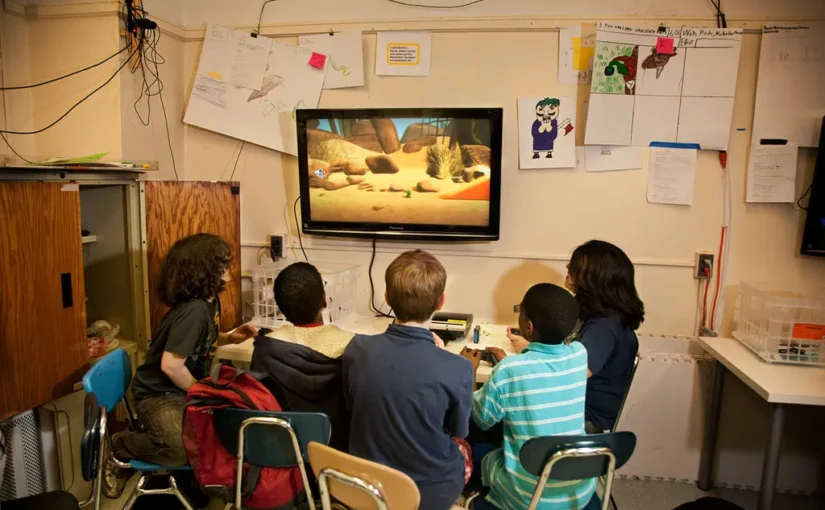
In James Paul Gee’s “What Video Games Have to Teach Us About Learning & Literacy” he explains how video games are somewhat a play on how people’s visual life could be. In other words, Gee elaborates a lot about how video games are designed for players to learn the controls throughout the game and then end up knowing how to beat it or complete it. As if learning the controls and then end up mastering the entire game without even realizing as if it was second nature. In Gee’s perspective, life is an exaggeration on human lives. On the other hand, humans’ day to day lives feel like we’re always learning. We have this fixation image on, getting a good job, getting good pay, getting a family, and retiring. Humans have a start to finish with obvious bumps in the roads. Humans are designed to fail and have drawbacks, humans don’t have a second try. Whereas in a video game, you can constantly fail and always press the restart button. We don’t have that, that’s why video games are so influential. It somewhat brings awareness to an individual. In a video game anyone can see a shiny red threat indicating something cautions is in their vicinity and implying it into literacy with reactions and ideas being considered when reading. It kind of just grows within us without even knowing, similar to a game, we learn basic controls and end up getting to the highest level over time, as if it was second nature to us.

Gee’s “Practice Principle”

The idea of Gee’s practice principle is that people need to have enough practice in something they enjoy, something they aren’t bored with in order to excel in it. I agree, in sports a player won’t do good, or may not even play if they aren’t enjoying the position they are assigned. I have some friends that play soccer, one of them being a pretty good player. He got assigned a position he didn’t want to play for, and thought of not playing for that team anymore unless he is assigned a better position, one that gets him more play time. This proves the principle, as he was discouraged based on the circumstances he had to practice, or participate under.
